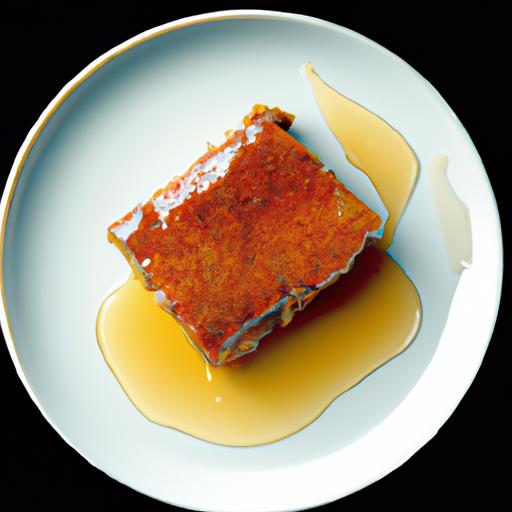


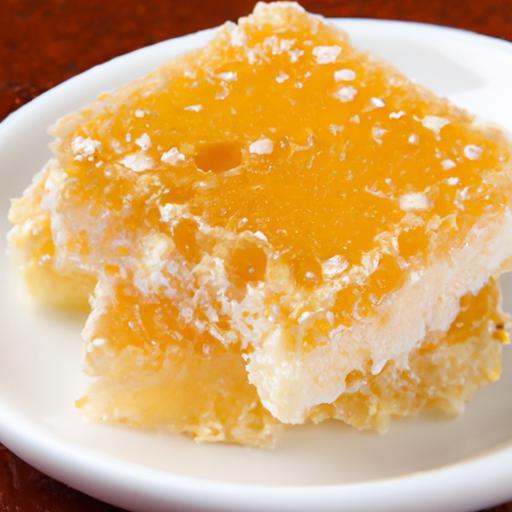
Imagine biting into a golden cloud of crunch, a confection that crackles delightfully between your teeth as it melts into sweet, buttery notes. Honeycomb candy-also known as cinder toffee, sponge toffee, or hokey pokey-is more than just a sugary treat; it’s a engaging playground of chemistry and culinary art. Beneath its bubbly, brittle surface lies a marvel of physical reactions, where the simple dance of sugar, heat, and a leavening agent creates a light, aerated texture that has enchanted taste buds for generations. In this article, we’ll unravel the sweet science behind honeycomb candy, exploring how sugar transforms, bubbles to life, and solidifies into that irresistible honeycomb structure you know and love.
Honeycomb candy, also known as cinder toffee, is a dazzling delight of crisp, airy textures paired with rich caramel flavors. Understanding the chemistry behind the perfect honeycomb texture unlocks the secret to crafting this golden marvel that crackles with every bite. This magical confection hinges on precise temperature control and the perfect blend of ingredients to deliver that iconic crunch and honey-like sweetness.
Prep and Cook Time
Preparation: 10 minutes
Cooking: 15 minutes
Total Time: 25 minutes
Yield
Makes approximately 12 servings
Difficulty Level
Medium – Requires careful attention to temperature but straightforward steps
Ingredients
- 1 cup granulated sugar
- 1/4 cup light corn syrup (helps prevent crystallization)
- 2 tbsp honey (for deeper flavor)
- 1/4 cup water
- 2 tsp baking soda, sifted (essential for aeration)
- 1 tsp vanilla extract (optional, for aromatic depth)
- Butter or oil, for greasing the pan
Instructions
- Prepare your workspace: Lightly grease an 8×8-inch baking dish or line it with parchment paper. Have all ingredients measured and ready-you’ll need to work swiftly.
- Combine sugar, corn syrup, honey, and water: In a medium heavy-bottomed saucepan, mix 1 cup granulated sugar, 1/4 cup corn syrup, 2 tbsp honey, and 1/4 cup water. Stir gently to blend.
- Cook the sugar mixture: Bring to a boil over medium heat without stirring. Use a candy thermometer and cook untill the temperature reaches 300°F (hard crack stage). This careful temperature control is key to the perfect honeycomb texture.
- Remove from heat and add baking soda: As soon as it hits 300°F, remove the pan from heat. Quickly and carefully whisk in the 2 tsp baking soda until the mixture turns a light golden foam. This reaction creates the airy bubbles that give honeycomb its characteristic crispness.
- Pour into prepared pan: Immediately transfer the bubbling mixture into your greased pan. Do not spread; let it naturally level out to retain air pockets.
- Cool and set: allow to cool completely at room temperature, about 1 hour. Avoid refrigerating, which can cause moisture absorption and stickiness.
- Break and serve: Once firm and crisp, break honeycomb into irregular shards with your hands or a knife.
Tips for Success with Honeycomb Candy
- Temperature mastery: Use an accurate candy thermometer. Going below 295°F leads to sticky,chewy candy; above 310°F risks burnt bitterness.
- Avoid stirring during cooking: Stirring encourages unwanted crystallization, yielding grainy texture.
- Fresh baking soda: Sift and use immediately to ensure vigorous aeration essential for crisp honeycomb candy.
- Humidity caution: Honeycomb absorbs moisture easily. Make candy on dry days and store in airtight containers with silica gel packets for prolonged crunchiness.
- Flavor variations: Add citrus zest or a pinch of sea salt for exciting flavor contrasts.
- Make-ahead tip: Store broken shards in an airtight container layered between parchment paper to prevent sticking.
Serving Suggestions
Present these glowing golden shards alongside your favorite chocolate sauce for dipping or scatter over creamy ice cream for a sensational textural contrast. Garnish with a sprinkle of flaky sea salt or dust with a pinch of cocoa powder to elevate the aromatic experience. honeycomb candy also doubles beautifully as an intriguing topping for cheesecakes or cup cakes, lending an irresistible crunch and sweetness that delights every palate.
| Nutrient | Per Serving |
|---|---|
| Calories | 110 kcal |
| Protein | 0 g |
| Carbohydrates | 28 g |
| Fat | 0 g |
For more on temperature control in confectionery, explore our comprehensive guide to candy thermometers.To understand the science behind sugar crystallization in depth, check out this American Chemistry Council resource.

Q&A
Q&A: The Sweet Science Behind Honeycomb Candy (Cinder Toffee)
Q1: What exactly is honeycomb candy, and why is it sometimes called cinder toffee?
A1: Honeycomb candy is a delightfully airy, crunchy treat made by whipping aerated sugar syrup with baking soda. When the mixture sets, it forms a brittle structure filled with bubbles, resembling a honeycomb-hence the name. In some regions, particularly the UK, it’s often called cinder toffee, a nod to the dark caramelized “cinder” bits sprinkled throughout its golden sponge-like body.
Q2: How does honeycomb candy get its signature porous texture?
A2: The magic lies in a little science and a pinch of baking soda. When baking soda (sodium bicarbonate) is added to the boiling sugar syrup, it reacts with the acidic surroundings to produce carbon dioxide gas. This gas bubbles up rapidly, inflating the syrup into a spongy, airy foam. As it cools, the foam solidifies, capturing the tiny gas pockets and creating that irresistibly crunchy texture.
Q3: Why do some recipes use golden syrup or corn syrup instead of just sugar?
A3: Golden syrup and corn syrup act as more than just sweeteners-they help control crystallization. pure sugar syrup tends to crystallize quickly,creating a gritty texture rather than a smooth,glass-like finish. The invert sugars in syrups interfere with sugar molecules aligning into crystals, ensuring the honeycomb sets into a glossy, crackly candy instead of a sandy mess.
Q4: What temperature should the sugar syrup reach for perfect honeycomb?
A4: Precision is critical. Typically, the syrup is heated to the “hard crack” stage, about 300°F (149°C). At this temperature, the sugar concentration is just right-hot enough to form a crisp brittle but not so hot that it burns and tastes bitter.Using a candy thermometer is a baker’s best friend here!
Q5: What happens if you stir the mixture after adding baking soda?
A5: Stirring after adding baking soda can deflate all that precious carbon dioxide foam, leaving you with a dense, chewy candy rather of a light and airy honeycomb. It’s best to stir quickly and then pour the bubbling mixture immediately into your prepared pan to set.
Q6: Can honeycomb candy absorb moisture from the air, and what effect does that have?
A6: absolutely! Honeycomb is hygroscopic, meaning it readily absorbs moisture (humidity) from the air. This can cause the candy to become sticky and lose its crunch over time-a process called “softening.” That’s why airtight storage is essential to preserve its signature snap and texture.
Q7: Are there any flavor variations to traditional honeycomb candy?
A7: Definitely! While classic honeycomb relies on caramelized sugar’s deep, toasty flavor, you can infuse your syrup with vanilla, coffee, or even a pinch of sea salt for an extra dimension.some adventurous makers even coat honeycomb pieces in chocolate, creating a decadent contrast between sweet, salty, crunchy, and creamy.
Q8: How does honeycomb candy compare to other aerated sweets like sponge toffee or seafoam?
A8: Though often used interchangeably, these sweets vary slightly by region and recipe. Sponge toffee is essentially the same concept-an aerated sugar candy. Seafoam typically includes a touch of cream of tartar or vinegar to aid the reaction, and the names often reflect local traditions. The core scientific principle of gas bubbles trapped in sugary syrup remains a joyful constant across all these treats.
In Summary
as the final bubbles settle and the golden honeycomb cools to a delicate crisp, we’re reminded that this humble confection is much more than a simple sweet treat. Behind its light, airy crunch lies a symphony of chemistry-sugar molecules dancing with baking soda, creating carbon dioxide pockets that give honeycomb its signature texture and whimsy. So next time you savor a piece of cinder toffee, take a moment to appreciate the sweet science that transforms basic ingredients into edible art, proving that even the simplest recipes hold a world of wonder within their sugary depths.